Blog
Why wax carton boxes are being replaced by PP boxes
Wax-coated cartons were the default for wet, cold and heavy loads. Recycling rules, waste costs and returnable supply chains are moving buyers to PP corrugated boxes.
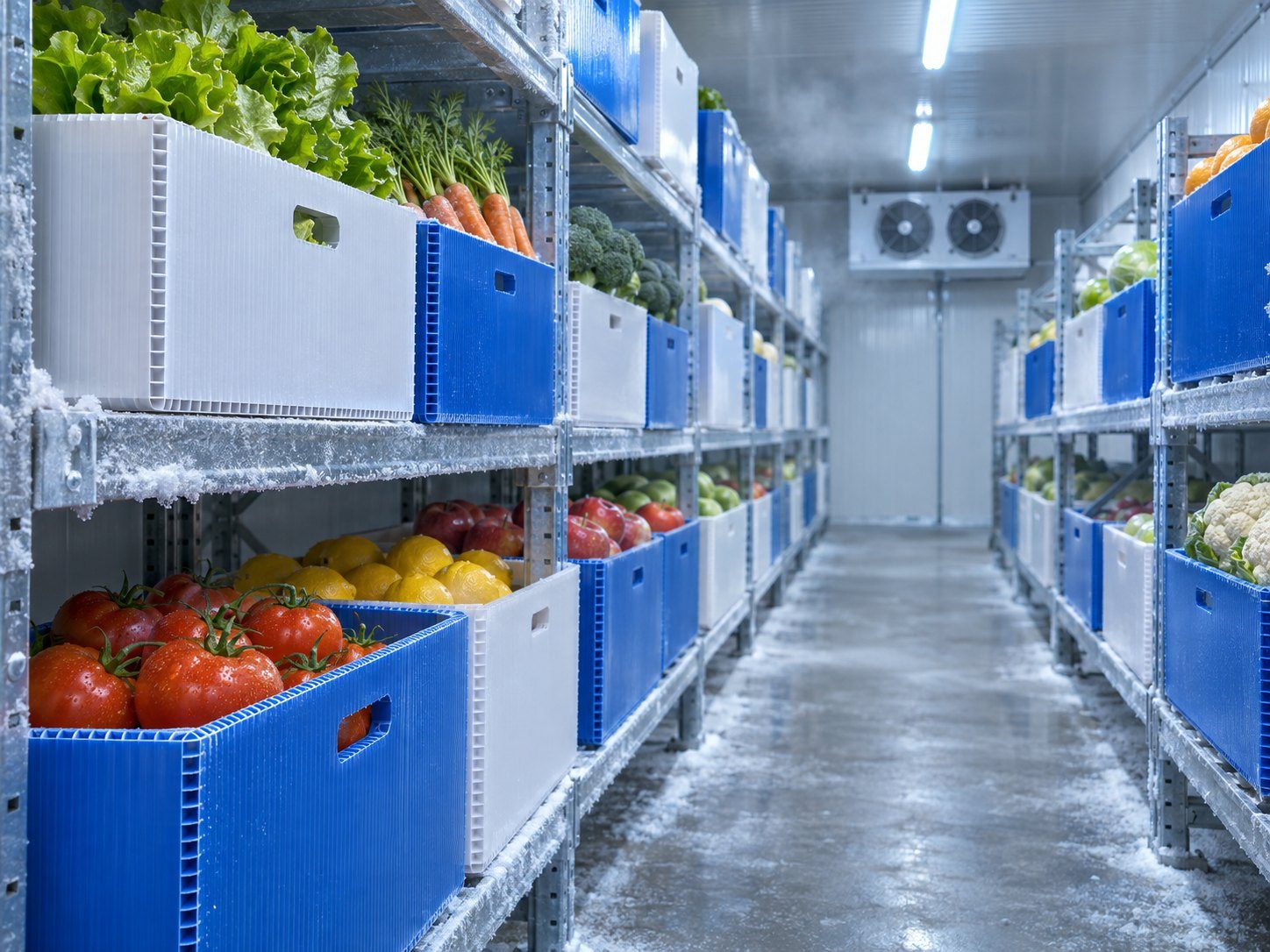
For decades, wax-coated corrugated cartons carried produce, seafood, poultry and ice-packed goods. The wax keeps the paper board from going soft when it gets wet. It also creates a problem at the end of the trip: a box that is part paper and part wax is hard to recycle.
1. Wax cartons are hard to recycle
Paper mills pulp old cartons in water. Wax does not dissolve; it coats the fibre and contaminates the pulp, so most mills reject wax-coated board. In practice, most wax cartons end up in landfill or are burned.
A PP corrugated box is a single material – polypropylene (resin code 5). At the end of its life it can be ground, re-melted and turned into new sheet or other PP products.
2. One trip versus many
A wax carton is used once. A PP box is washed and sent back, trip after trip. In closed loops – farm to distribution centre, supplier to plant, warehouse to store – the same box replaces a new carton on every load.
- No soaking or softening from water, ice or condensation
- Washable and sanitisable between trips
- Folds flat for the return journey
- Holds its strength in cold rooms down to -20°C
3. The cost is per trip, not per box
A PP box costs more than a wax carton on day one. Spread over its working life, the cost per trip is a fraction of a new carton each time – and there is no waste to haul away. The more often a box goes round, the better the numbers.
4. Buyers and regulators are asking for it
Retailers, exporters and e-commerce companies now track packaging waste and recyclability. India’s plastic waste management rules also push producers towards reuse and recycling. Returnable, single-material PP packaging is easier to report on and easier to justify.
Where to start
Pick one closed loop where cartons come back to you – a farm-to-warehouse route, an inter-plant shuttle, or a cold room. Run a trial with PP boxes made to the same size and load, and compare the cost per trip after a few months. Plasmix can make the samples.